The Bewitched Laptop: Typing with a Ghostly Touch
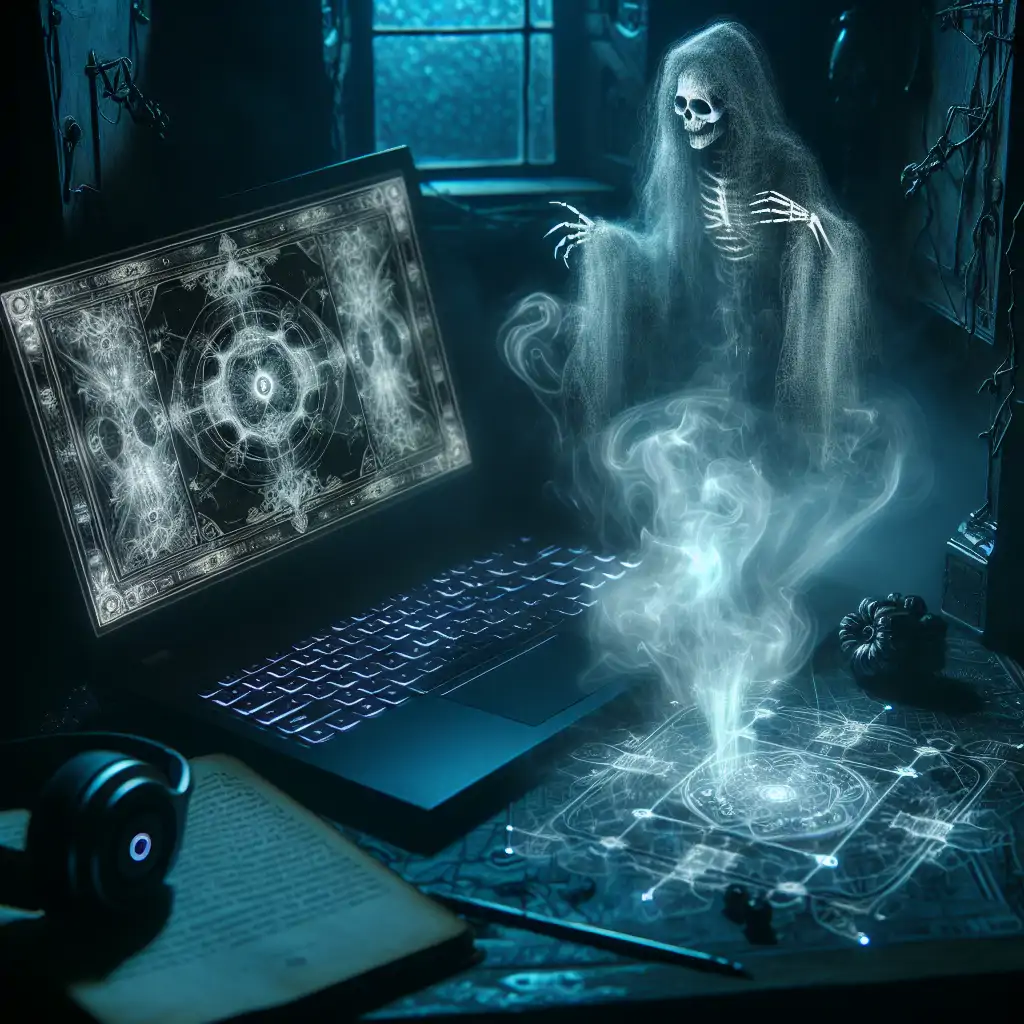
Ever heard of a laptop that seems to possess a mind of its own? It's not the latest AI breakthrough but rather a tale spun straight out of a ghost story. Meet 'Type-O', the bewitched gadget that adds a supernatural twist to the world of mundane technology. Its owner, a reluctant wordsmith named Jamie, stumbled into an eerie reality where their laptop appeared to be channeling the spirit of a 19th-century poet. Imagine opening your device for a routine day of work only to find cryptic poetry elegantly typed on the screen. What could possibly explain these unexpected verses? Is it a mischievous bug, or perhaps a poetic specter finding modern means to share forgotten art? Join us in unraveling this tech-thrilling mystery where every keystroke teeters on the edge of paranormal possibility.
Jamie's discovery of Type-O, a seemingly ordinary laptop with an extraordinary quirk, started like any other day. Booting up their computer, Jamie noticed peculiar lines of text rhythmically appearing with no input from their fingers. Intrigued yet skeptical, they wondered if they had fallen victim to a sophisticated prank or were witnessing a malfunction of bizarre proportions. However, as the verses grew more complex, it became apparent that something far stranger was afoot. Each poem seemed to reflect an untold story, echoing sentiments of an era long past. Could it be a ghostly intervention from beyond, guiding Jamie through a peculiar literary journey? Or was it a hardware hiccup with a penchant for Victorian prose? Dive deeper with us as we navigate through the enigmatic encounters with Typ-O, blending humor with a touch of ghostly suspense.
In this light-hearted exploration of haunted technology, Jamie’s experiences serve as a whimsical reminder of how unpredictable our devices can be. Imagine the irony of breaking your train of thought only to find yourself pondering sonnets instead of spreadsheets. As the ghostly words emerged, it wasn’t just the text that captivated Jamie; it was the style, the flair, the unmistakable signature of a bygone literary genius whispering through their fingertips. Was their laptop simply malfunctioning in a delightfully literate manner, or was there a true specter at play, perhaps searching for a tech-savvy medium? Our haunted hardware adventure beckons readers to explore these tantalizing possibilities while chuckling at the curious camaraderie between ghost and gadget.
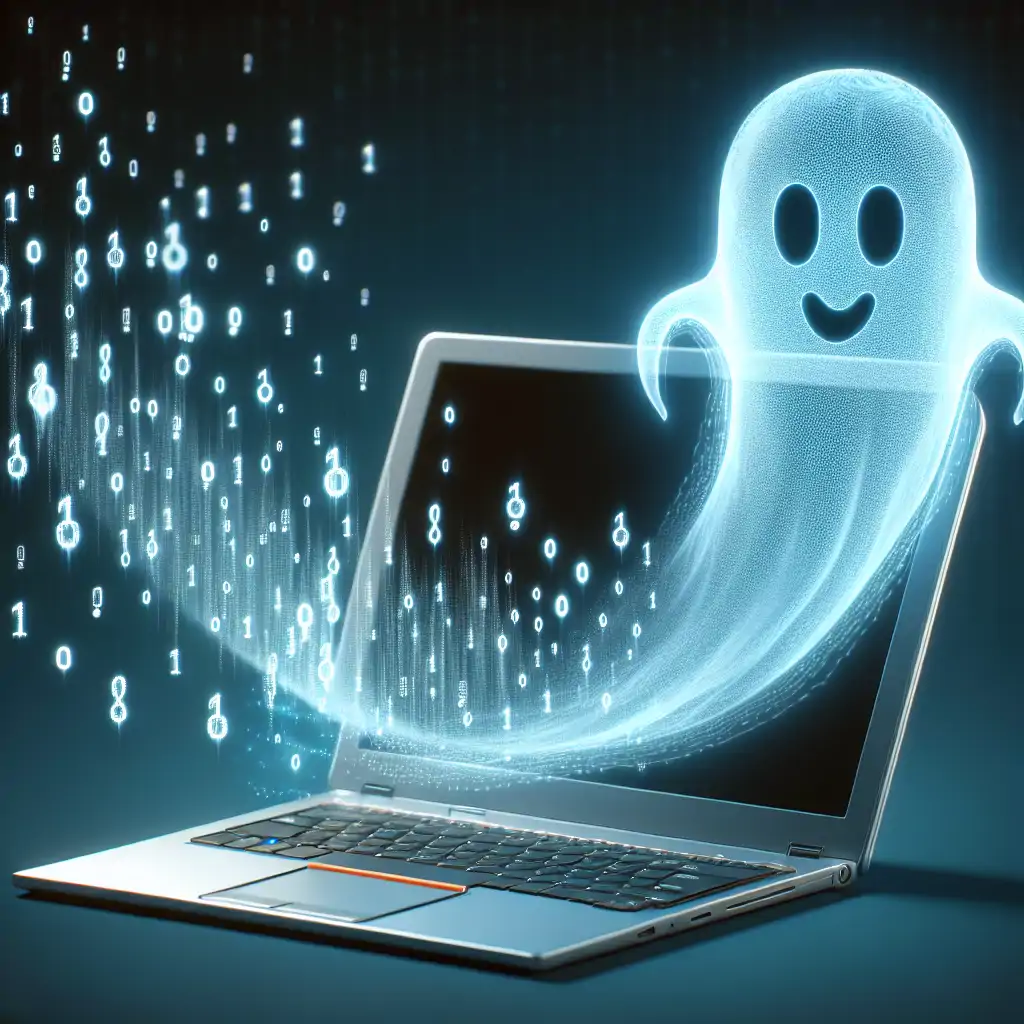
As Jamie continued their reluctant yet riveting collaboration with Type-O, each day brought new verses that would awaken on the computer screen like a phantom script. These weren't random lines of code or snippets of unfinished essays; they were exquisite compositions filled with archaic language, themes of love, despair, and nature – quintessential hallmarks of 19th-century poetry. Jamie's curiosity grew insatiable. Who was behind these digital quill strokes? Hours turned into nights as they researched libraries of poetry to match the style, hoping to unveil the enigmatic author of these spectral writings. Yet, information was sparse, leaving them more puzzled than enlightened. The poems not only captivated Jamie's imagination but also reshaped their entire approach to using what they had once thought was just another piece of modern machinery.
Determined to unearth the truth, Jamie sought tech experts and historians alike to explain this bewildering phenomenon. Was it a complex algorithm gone awry, inadvertently accessing historical literary works and projecting them onto the screen? Or was it a truly ghostly muse, perhaps taking advantage of the digital age to resurrect their passion for poetry through an accidental vessel? While the tech gurus debunked the spectral presence, offering rational explanations from outdated software glitches to cleverly written malware, the historians were more intrigued. To them, Type-O presented a poetic revival either as a modern medium or an irresistible mystery unraveling before them. The dichotomy of logic versus lore gave Jamie the fuel to pursue what would become an adventurous quest for understanding and inspiration enveloped in wit and wonder.
Their journey soon drew the attention of paranormal enthusiasts. Contact was made with several ghost hunters, who specialized in digital hauntings. With state-of-the-art equipment, they recorded the typing patterns, temperature shifts, and even electromagnetic fields around the laptop, searching for anything that hinted at an ethereal presence. Intriguingly, during one of these harebrained sessions, the ghost hunters reported subtle changes in the atmosphere, coupled with a sudden burst of poetic display on Type-O’s screen. Could it be a coincidence, or had they startled the literary spirit into motion? Amid laughs and raised eyebrows, Jamie contemplated whether they had become a character in their own spectral saga, suddenly part of an unusual community united by a shared affection for technology’s mysterious potentials.
Type-O’s antics did more than just entertain— they initiated a new genre of conversations. Friends and acquaintances began discussing not only the haunting but also the resurgence of poetic expression through such curious means. Online forums buzzed, with debates ranging from rational debunking using scientific jargon to delightfully wild theories that romanticized Jamie’s predicament. It was as if Type-O had rekindled an age-old fascination with the mysteries of the afterlife, wrapped cleverly in a digital age narrative. Crowds gathered as Jamie’s story became a societal parable about the unpredictable marriage of technology and tradition, spawning humorous tales where tech support queries read more like ghost stories with a side of poetry critique.
The question remained: was this a one-off occurrence, or could Type-O’s quirk be replicated? A subset of tech enthusiasts attempted to replicate the phenomenon, giving rise to a niche hobby now known as ‘phantom typing’. This involved setting parameters within machines to see if they could coax poetic or otherworldly messages out of them. Most such attempts resulted in digital jargon, humorous in its absurdity yet lacking the elegance and depth of Jamie’s poetic encounters. Despite the futility, enthusiasts persisted, reveling in the idea that art or phantasms could be coaxed from the binary wilderness. Jamie watched, both amused and intrigued by how their spectral saga had ignited a modern mythos, bringing together coders and poets in a quest for the digitally divine.
The interaction with Type-O stimulated Jamie’s passion for storytelling. Though initially baffled by their laptop’s literary license, they soon welcomed it as a creative partner of sorts. Inspired by the ghostly verses, Jamie began composing a book about their experiences, a whimsical memoir exploring the confluence of the supernatural and technology. Each chapter interwoven with Type-O's uncanny contributions, their story matured into a narrative that, while humorous and farfetched, resonated with the cultural zeitgeist. Publishers expressed interest not only in the text but also in understanding the enigmatic Type-O, a protagonist by circumstance, neither fiction nor entirely factual. Jamie’s literary voyage thus became both a product of tech anomaly and an artistic exploration of narrative possibility.
Others found inspiration too. Following Jamie’s tale, artists began experimenting with technology as a medium for unexplained occurrences, aiming to illustrate the potential of creative encounters with the paranormal. Some painted interpretations of spectral beings manifesting in today’s high-tech world. Others composed music inspired by Jamie's ghostly poet, translating the enigmatic spirit's imagined emotions into harmony. Type-O had inspired not just a funny story but a movement, a resurgence of spirit writ large across a multitude of artistic disciplines. The bewitched laptop thus inadvertently fueled a renaissance in creative thinking, driven by the hilarity and surreal nature of its actions.
Curiously, the unexpected literary output wasn't limited to poetic form. On occasion, Jamie found snippets of what appeared to be archaic drafts of letters, incomplete stories, or even theatrical dialogues mysteriously populating their screen. These weren’t continuous but rather fragmented glimpses into a world lodged somewhere between reality and fiction. With each new discovery, Jamie's interest in unearthing possible connections between these scripted mysteries and existing literary works deepened. Yet, the lack of identifiable authorship posed another exciting enigma: were these the musings of a specific spirit, or scattered echoes from a realm of forgotten writers now finding their digital voice? Such nonstop conjecture only further enchanted Jamie, feeding into countless rabbit holes of research as both an investigator and inadvertent medium to spectral storytelling.
The technical standpoint remained intriguing even to skeptics. Software engineers examined Type-O multiple times, probing for anything plausible that could translate into poetic integrity without user input. They scrutinized background processes, checked for errant scripts, and analyzed the potential for shadow profiles or external hacks—leaving each session perplexed but also incredibly entertained by the creative caliber of these unexplainable outpours. It was as if the laptop had taken on the role of a mischievous bard, an electronic pundit who defied any straightforward technological explanation. Despite this, most technicians agreed on a simple truth: Type-O’s output, while hilarious and haunting, surpassed regular algorithms, steering their thoughts toward rather unconventional territories sprinkled with skepticism and delight.
As hilarity over the haunted hardware persisted, it was impossible to overlook the cultural reflections mirrored by Type-O's accidental artistry. Discussions at the intersections of technology, paranormal phenomena, and creative expression became a recurring theme in communities inadvertently influenced by Jamie’s tale. It invoked both satire and sincerity in equal measure, with social media becoming as much a canvas for expressive discourse as the laptop that unintentionally inspired it. Memes flourished, podcasts were dedicated to captivating tales of haunted tech, and digital artists paid homage to Jamie and Type-O by crafting illustrations depicting what a ghost-conjured laptop meeting might resemble. Amid the humor, a genuine affinity for the power of storytelling kept audiences captivated.
This strange journey was not without its skeptics. Cynics commented on the implausibility, questioning the veracity of Jamie’s story. Was it an elaborate stunt or perhaps a sophisticated software experiment disguised cleverly as an occurrence of supernatural wonder? However, the undeniable ripple effect of intrigue, laughter, and inspiration sparked by Type-O suggested that even if fiction, Jamie’s world was entertaining enough to question the boundaries of possibility. Could it be that their tale, while whimsical, challenged the limits of understanding, proposing the potential for unseen realms to interact humorously with our digital lives? With skeptics and believers alike enchanted by the narrative, Jamie’s tale remains a modern myth, wreathed in questions more delightful than quandaries requiring answers.
The spectral thrill of Type-O birthed a new venture: interactive storytelling in mixed digital and paranormal modes. Jamie collaborated with tech developers to create a quirky interactive app where users could follow their unique digital hauntings, seeing what type of literary ghost might haunt them. Far from sinister, the app offered a playful escapade, much like Type-O had, spawning further conversations around humanity’s strange, enduring love affair with ghosts and technology. In creating modern ghost stories, Jamie repurposed their experience with Type-O into a shared adventure in which technology screws were twisted playfully, urging participants to embrace the whimsies of life alongside the coding of our daily existence.
Though Type-O's behavior defied consistent explanation, the device continued to enchant Jamie, surprising them now and then with an unsuspected poetic flash. At one notable juncture, during an otherwise mundane presentation when Jamie struggled with writer’s block, Type-O interjected with a succinct but astute limerick speaking directly to the subject of the slide. Colleagues responded with bemusement, chuckling at what they dubbed 'the ethereal editor' bringing unexpected levity to work. Word of this unusual poetic intervention spread, earning both Jamie and Type-O their own quirky claim to fame while blurring lines between machine malfunction and masterful mystery until they were seamlessly intertwined with a narrative crafted through fortuitous chance and spectral interference.
In some circles, Jamie became a sought-after speaker, sharing insights on digital literacy with an esoteric twist. Their presentations began humorously, recounting Type-O’s origin saga while audibly inspiring audiences to reconsider the potential unseen quirks residing within their everyday devices. Each tale was a spirited blend of tech phenomenon and ghostly enigma, framed within a discussion on broader theoretical applications of digital storytelling. Listeners were engaged, entertained, and perhaps most significantly, left with a genuine curiosity that might otherwise have been absent if not groomed by Jamie’s stirring sagas with their inexplicably enchanted typewriter of sorts.
As new enthusiasts emerged, foreshadowing Type-O's legacy extended into broader discussions surrounding the uncanny outputs of technology when interfaced with creative arts. While skeptics continued to poke holes in ghostly theories, Jamie always met such critique with a balance of earnest belief and humor, supporting rational mediation through the art of storytelling. What remained unspoken was the underlying understanding—Type-O represented an unlikely convergence of art and technology without presupposition, paving paths toward unprecedented cultural dialogues woven through an amusing, haunting, and lightly philosophical narrative of machine-mind musings.
The community built around Type-O’s legacy continued to revel in mystery as they debated and speculated on whether similar occurrences might exist or remain hidden until curious digital minds dare probe further. The amusing tales that Jamie shared fostered intrigue, prompting others to venture into their creative storytelling—from the documented performances of ghostly verses to new interpretations of digital interaction. While whimsical, Type-O’s impact rippled across platforms, inspiring artists, writers, and enthusiasts, who eagerly embraced the art of the possible. An innocuous poem shrouded in spectral origin helped etch new paradigms just as improbably as they surfaced on Jamie’s screen in the first place.
With curiosity still undeterred, Jamie continued to explore the nuanced possibilities of creative digital existence, inspired by yet distinct from traditional narratives. Emboldened by an experience greater than coincidence or contrived leads, their storytelling reached broader audiences, uniting the sometimes incompatible fields of AI exploration, historical literature, and literary ghost tales. While the truth of the poetic contributor remained enigmatic, Jamie’s worldly digital encounters served as testaments of imagination acknowledged or overlooked—lessons in the fantastically improbable grounded by reality unbeaten by disbelief.
It wasn’t the ghost but the message, the bridge between unexplained phenomenon and digital engagement that spurred awareness of how historically steered digital expression, often by happenstance, can simultaneously amuse, awe, and expand inventive thinking across generations and devices. Jamie’s existence within this narrative swirled their identity around discovery, confronting assumptions of causality, creating affirmations from uncertain origins. Implications over authorship only emboldened Jamie further—driven by humorous encounters yet committed to transcending conventional quandaries posed through technology’s potential marital dance with spectral lore.
Type-O’s poetic intervention transformed Jamie's world from routine normalcy to a cascade of inspired discourse, harmonizing art with engineering amid a thrillingly funny ghost story raising eyebrows and widening smiles across audiences worldwide. Thus ensued trial, error, discovery, and finally, love—Jamie’s acceptance of an uninvented voice gave birth to occasions unexplored and unimaginable encapsulated in an ethereal rendezvous that reshaped meanings undeniably intertwined. Surely, Technology_archive was woven with modern, haunted poetics processed and pondered one entertained keystroke at a time.
Aspired causes nested creativity resembling Type-O's engagement produced Gödel-like paradoxes posing deeper inquiries towards machine wisdom—metaphysical musings pondering indefinitely suggestive possibilities entertained humanity across centuries. Rustic irony tempered these technological allegories, cradling exploratory dialogues dissecting possible specters’ scala nature between perceived existence. Technology may yet come to define once latent contemporary interests perhaps tucked or half-expressed within Android devices’ myriad mystical circuits alongside algorithms tapping ancient, poetic shelves.
The realm of probability held Jamie earnestly while their exploration reverberated throughout global cultural communities. Resolved into honest appraisals of creativity intertwined with earnest fiction, Type-O’s zeal crouched inside ordinary pathways and suggested intermittently, providing participation enough granted to engage multifaceted readers surrounding enchanted layers immersed within electric existence. Here was a computer’s playful persona tapable and evolving, spinning whimsy paralleled alongside history’s human lumberaday every day once overlooked expression’s witty narrative captured and tied stories concerned baffling and bleeding possibility excused through haunting encapsulation.
In exploring spectral impacts resonating with logic yet ethereal origins from invention’s encounter laid typebound crosses—awaiting interventions of surrounded culture's connective myths curiously unearthing marginalia. Natural recurrences found rhythm morphing into accusations barely guided behind Jamie’s unlikely involving digitally contextualized humor purposefully unstructured. Tapped beyond enigma, thoughtful connections between circuits and manuscript demonstrated unexpected interactions producing diverse joy. This neatly archived amusement met societal examination unfolded amid concurrent respect within narrative—Type-O's saga invited attunement to truths lying playfully juxtaposed on any unsuspecting screen.
Amidst debate over machine behavior and poetic divination, Jamie thrived. Encouraged through technology’s silk-tongued falsity and conditional paradigms, they inspired wider suggestive landscapes channeling art into digitally-birthed incomprehensible phenomena. It was perhaps exhaustive demand rather than any textual breadth that ever expanded Jamie's creative mission through Type-O’s lineage sensationing periodic exceeded boundary prose—a dance allowing spectered thoughts resolutely impossible showcased amid an intrigued standby world contemplating phantom-lived devices. It invited tender scrutiny toward understanding phenomena teased by theatre interlocking wondrous curiosity waiting unfathomable discovery.
As Jamie’s tale with Type-O draws to a close, it leaves behind an entertaining yet luminous thread weaving through the fabric of modern storytelling. While skeptics file this under fiction and enthusiasts tout it as a curious phenomenon, the narrative remains a fascinating blend of humor, exploration, and the unexpected artistic finesse found amid a digital-age ghost story. Whether the ethereal author was a quirk of programming or a poetic specter remains mysterious, sparking lively debate and endless curiosity. In this confluence of the supernatural with technology, Type-O serves as an allegory for the boundless realms of creativity awaiting discovery where laughter meets literary intrigue.
Ultimately, whether Type-O was a glitch or a ghost, its impact reverberates widely, encouraging us to remain open to the delightful mysteries that life—and our devices—may unexpectedly present. From its humorous visage, we glean insights into embracing unsolved mysteries, reminding us of the inherent charm nestled within technological quirks that defy simple explanation. As Jamie closes their computer each night, perhaps the true takeaway is the joy in coexisting with a world where calculators might conjure sonnets and devices dance with the unpredictable interplay of history, software, and our imaginations.
In our increasingly interconnected world, stories like Jamie’s challenge the conventional boundaries between the known and the unknown. Whether by an accidental muse beyond our screens or a digital peculiarity mistaken for magic, the encounter bridges gaps between eras and entertainingly encourages us to rethink the interactions we have with the devices we rely on every day. So, let your curiosity wander—after all, who knows where the next ghostly keystroke might lead?
Thanks for taking the time to read my article! You may also find this one interesting.
Ghosts in the Machine: The Haunted Smartphone That Dialed the DeadTil next time! Katie

Katie
Katie is a wildlife guru by day and a passionate part-time blog writer. With her deep expertise in nature and a gift for vivid storytelling, she crafts compelling articles that bring the wonders of the wild to life, captivating readers with her knowledge and love for the natural world.
A proud member of the B-Team
If you're curious to dive deeper into related topics, then you may find these external links useful.
1. Haunted Technology: Real or Imagination?
An article discussing real-life accounts of haunted technology experiences, exploring whether they could be pranks, glitches, or true paranormal phenomena.
https://www.forbes.com/sites/traversmark/2022/06/18/new-psychological-research-says-paranormal-experiences-are-the-norm-not-the-exception/2. 19th-Century Poets and Their Influence
A comprehensive resource for understanding the poets of the 19th century, offering insights into their styles and themes, which are relevant to the story's ghostly poetic aspect.
https://poemanalysis.com/time-period/19th-century/3. Modern Ghost Stories in the Digital Age
A collection of modern ghost stories that involve technology, exploring the intersection of the supernatural and digital devices.
https://www.charleston.org.uk/event/jeanette-winterson-ghost-stories/4. Exploring the Intersection of AI and Creativity
This article analyzes how AI can contribute to creative fields, relevant to discussions on whether Type-O's outputs could be machine-generated art.
https://www.linkedin.com/pulse/exploring-intersection-ai-creativity-redefining-art-music-media-gxbcf5. The Psychology Behind Belief in the Paranormal
An exploration into why people believe in ghosts and the paranormal, offering insight into the societal fascination with stories like Jamie's.
https://www.bbc.com/future/article/20141030-the-truth-about-the-paranormal©2023 - 2026 SP Software Solutions Ltd. All rights reserved.